
期刊文章
过刊浏览
- Volumes 108-119 (2025)
-
Volumes 96-107 (2025)
-
Volume 107
Pages 1-376 (December 2025)
-
Volume 106
Pages 1-336 (November 2025)
-
Volume 105
Pages 1-356 (October 2025)
-
Volume 104
Pages 1-332 (September 2025)
-
Volume 103
Pages 1-314 (August 2025)
-
Volume 102
Pages 1-276 (July 2025)
-
Volume 101
Pages 1-166 (June 2025)
-
Volume 100
Pages 1-256 (May 2025)
-
Volume 99
Pages 1-242 (April 2025)
-
Volume 98
Pages 1-288 (March 2025)
-
Volume 97
Pages 1-256 (February 2025)
-
Volume 96
Pages 1-340 (January 2025)
-
Volume 107
-
Volumes 84-95 (2024)
-
Volume 95
Pages 1-392 (December 2024)
-
Volume 94
Pages 1-400 (November 2024)
-
Volume 93
Pages 1-376 (October 2024)
-
Volume 92
Pages 1-316 (September 2024)
-
Volume 91
Pages 1-378 (August 2024)
-
Volume 90
Pages 1-580 (July 2024)
-
Volume 89
Pages 1-278 (June 2024)
-
Volume 88
Pages 1-350 (May 2024)
-
Volume 87
Pages 1-338 (April 2024)
-
Volume 86
Pages 1-312 (March 2024)
-
Volume 85
Pages 1-334 (February 2024)
-
Volume 84
Pages 1-308 (January 2024)
-
Volume 95
-
Volumes 72-83 (2023)
-
Volume 83
Pages 1-258 (December 2023)
-
Volume 82
Pages 1-204 (November 2023)
-
Volume 81
Pages 1-188 (October 2023)
-
Volume 80
Pages 1-202 (September 2023)
-
Volume 79
Pages 1-172 (August 2023)
-
Volume 78
Pages 1-146 (July 2023)
-
Volume 77
Pages 1-152 (June 2023)
-
Volume 76
Pages 1-176 (May 2023)
-
Volume 75
Pages 1-228 (April 2023)
-
Volume 74
Pages 1-200 (March 2023)
-
Volume 73
Pages 1-138 (February 2023)
-
Volume 72
Pages 1-144 (January 2023)
-
Volume 83
-
Volumes 60-71 (2022)
-
Volume 71
Pages 1-108 (December 2022)
-
Volume 70
Pages 1-106 (November 2022)
-
Volume 69
Pages 1-122 (October 2022)
-
Volume 68
Pages 1-124 (September 2022)
-
Volume 67
Pages 1-102 (August 2022)
-
Volume 66
Pages 1-112 (July 2022)
-
Volume 65
Pages 1-138 (June 2022)
-
Volume 64
Pages 1-186 (May 2022)
-
Volume 63
Pages 1-124 (April 2022)
-
Volume 62
Pages 1-104 (March 2022)
-
Volume 61
Pages 1-120 (February 2022)
-
Volume 60
Pages 1-124 (January 2022)
-
Volume 71
- Volumes 54-59 (2021)
- Volumes 48-53 (2020)
- Volumes 42-47 (2019)
- Volumes 36-41 (2018)
- Volumes 30-35 (2017)
- Volumes 24-29 (2016)
- Volumes 18-23 (2015)
- Volumes 12-17 (2014)
- Volume 11 (2013)
- Volume 10 (2012)
- Volume 9 (2011)
- Volume 8 (2010)
- Volume 7 (2009)
- Volume 6 (2008)
- Volume 5 (2007)
- Volume 4 (2006)
- Volume 3 (2005)
- Volume 2 (2004)
- Volume 1 (2003)
Volume 117
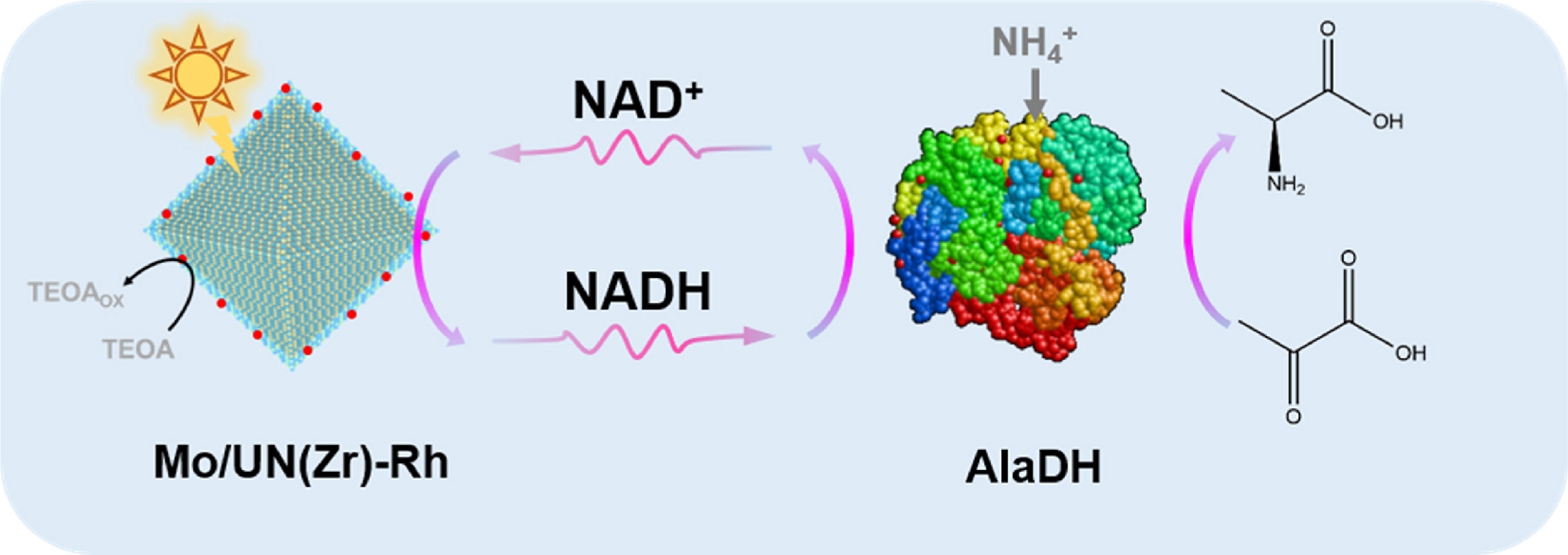
Artificial photosynthesis of L-alanine via an enzyme-photo-coupled catalytic system based on Mo/UN(Zr)
Chen Tao a, Shilong Chang a, Xinyu Mao a, Yu Chen a, Yexin Dai a b d *, Jiafu Shi a b d e *, Zhongyi Jiang b c d e
a School of Environmental Science and Engineering, Tianjin University, Tianjin, 300072, China
b State Key Laboratory of Synthetic Biology, Tianjin University, Tianjin, 300072, China
c School of Chemical Engineering and Technology, Tianjin University, Tianjin, 300072, China
d Collaborative Innovation Center of Chemical Science and Engineering (Tianjin), Tianjin University, Tianjin, 300072, China
e Joint School of National University of Singapore and Tianjin University, International Campus of Tianjin University, Fuzhou, 350207, China
10.1016/j.partic.2026.08.013
Volume 117,
October 2026,
Pages 390-396
Received 11 July 2026, Revised 29 July 2026, Accepted 11 August 2026, Available online 12 August 2026, Version of Record 20 August 2026.
E-mail:
daiyexinf@tju.edu.cn; shijiafu@tju.edu.cn
Highlights
• Rh immobilized on Mo/UN(Zr) promotes interfacial electron transfer, achieving the NADH regeneration yield of 55.1%.
• Optimized reaction conditions mitigate photo-induced enzyme deactivation, preserving 58.5% of the initial AlaDH activity.
• The enzyme-photo-coupled catalytic system converts pyruvate into L-alanine with a 1.38 mM yield under light-dark cycles.
Abstract
Coupling photocatalytic cofactor regeneration with enzymatic amination offers a direct route to artificial photosynthesis of L-amino acids. However, the overall efficiency and stability of such systems hinge critically on the photophysical properties of photocatalysts and the compatibility between the enzymatic and photocatalytic modules. Herein, we developed an enzyme-photo-coupled catalytic system incorporating Mo/UN(Zr)-Rh for the artificial photosynthesis of L-alanine. The photocatalytic module employing Mo/UN(Zr)-Rh achieved an NADH regeneration efficiency of 55.1%, which is 1.8-fold and 1.2-fold higher than those of UN(Zr) and Mo/UN(Zr), respectively, along with excellent stability. The pH and the concentration of triethanolamine (TEOA) were optimized to enhance the compatibility between the photocatalytic and enzymatic modules, thus effectively maintaining the structural integrity and catalytic activity of the enzyme. An L-alanine yield of 1.38 mM was obtained under light-dark cycling conditions, demonstrating a promising strategy for sustainable amino acid production.
Graphical abstract
Keywords
Artificial photosynthesis; L-Alanine synthesis; Photocatalysis; NADH
文章导读