
期刊文章
过刊浏览
- Volumes 108-119 (2025)
-
Volumes 96-107 (2025)
-
Volume 107
Pages 1-376 (December 2025)
-
Volume 106
Pages 1-336 (November 2025)
-
Volume 105
Pages 1-356 (October 2025)
-
Volume 104
Pages 1-332 (September 2025)
-
Volume 103
Pages 1-314 (August 2025)
-
Volume 102
Pages 1-276 (July 2025)
-
Volume 101
Pages 1-166 (June 2025)
-
Volume 100
Pages 1-256 (May 2025)
-
Volume 99
Pages 1-242 (April 2025)
-
Volume 98
Pages 1-288 (March 2025)
-
Volume 97
Pages 1-256 (February 2025)
-
Volume 96
Pages 1-340 (January 2025)
-
Volume 107
-
Volumes 84-95 (2024)
-
Volume 95
Pages 1-392 (December 2024)
-
Volume 94
Pages 1-400 (November 2024)
-
Volume 93
Pages 1-376 (October 2024)
-
Volume 92
Pages 1-316 (September 2024)
-
Volume 91
Pages 1-378 (August 2024)
-
Volume 90
Pages 1-580 (July 2024)
-
Volume 89
Pages 1-278 (June 2024)
-
Volume 88
Pages 1-350 (May 2024)
-
Volume 87
Pages 1-338 (April 2024)
-
Volume 86
Pages 1-312 (March 2024)
-
Volume 85
Pages 1-334 (February 2024)
-
Volume 84
Pages 1-308 (January 2024)
-
Volume 95
-
Volumes 72-83 (2023)
-
Volume 83
Pages 1-258 (December 2023)
-
Volume 82
Pages 1-204 (November 2023)
-
Volume 81
Pages 1-188 (October 2023)
-
Volume 80
Pages 1-202 (September 2023)
-
Volume 79
Pages 1-172 (August 2023)
-
Volume 78
Pages 1-146 (July 2023)
-
Volume 77
Pages 1-152 (June 2023)
-
Volume 76
Pages 1-176 (May 2023)
-
Volume 75
Pages 1-228 (April 2023)
-
Volume 74
Pages 1-200 (March 2023)
-
Volume 73
Pages 1-138 (February 2023)
-
Volume 72
Pages 1-144 (January 2023)
-
Volume 83
-
Volumes 60-71 (2022)
-
Volume 71
Pages 1-108 (December 2022)
-
Volume 70
Pages 1-106 (November 2022)
-
Volume 69
Pages 1-122 (October 2022)
-
Volume 68
Pages 1-124 (September 2022)
-
Volume 67
Pages 1-102 (August 2022)
-
Volume 66
Pages 1-112 (July 2022)
-
Volume 65
Pages 1-138 (June 2022)
-
Volume 64
Pages 1-186 (May 2022)
-
Volume 63
Pages 1-124 (April 2022)
-
Volume 62
Pages 1-104 (March 2022)
-
Volume 61
Pages 1-120 (February 2022)
-
Volume 60
Pages 1-124 (January 2022)
-
Volume 71
- Volumes 54-59 (2021)
- Volumes 48-53 (2020)
- Volumes 42-47 (2019)
- Volumes 36-41 (2018)
- Volumes 30-35 (2017)
- Volumes 24-29 (2016)
- Volumes 18-23 (2015)
- Volumes 12-17 (2014)
- Volume 11 (2013)
- Volume 10 (2012)
- Volume 9 (2011)
- Volume 8 (2010)
- Volume 7 (2009)
- Volume 6 (2008)
- Volume 5 (2007)
- Volume 4 (2006)
- Volume 3 (2005)
- Volume 2 (2004)
- Volume 1 (2003)
Volume 117
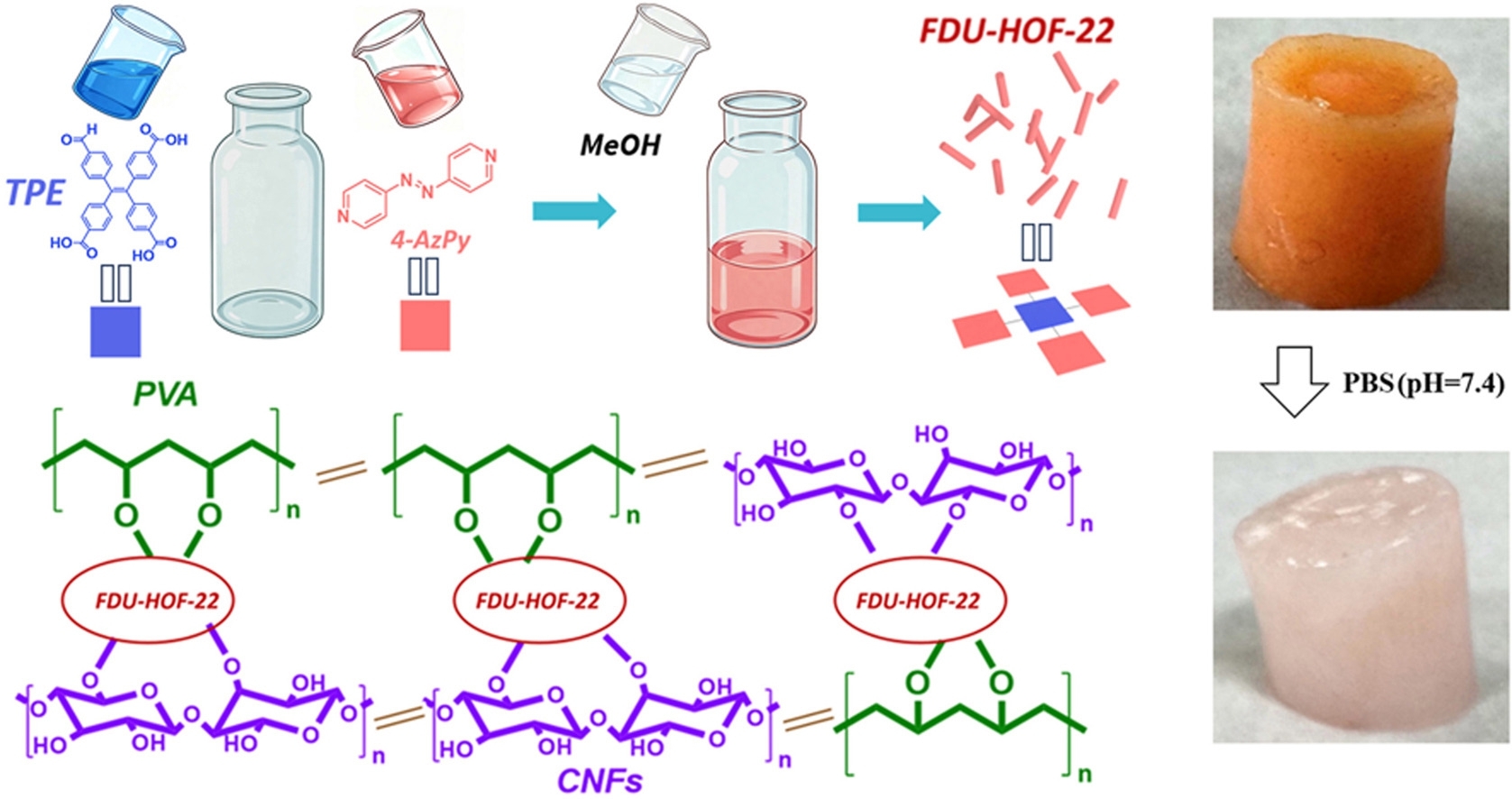
A binary hydrogen-bonded organic framework reinforced biodegradable hydrogel composite for synergistic antibacterial therapy and controlled degradation
Jiaxuan Liu a, Peiyan Li b, Chenghao Zhang b, Hang Tian c, Peng Li a *
a State Key Laboratory of Porous Materials for Separation and Conversion, Shanghai Key Laboratory of Molecular Catalysis and Innovative Materials, Department of Chemistry, College of Smart Materials and Future Energy, Fudan University, Shanghai, 200438, China
b Guangxi Key Laboratory of Clean Pulp & Papermaking and Pollution Control, School of Light Industry and Food Engineering, Guangxi University, Nanning, 530004, China
c School of Chemistry and Chemical Engineering, Guangxi Key Laboratory of Petrochemical Resource Processing and Process Intensification Technology, Guangxi University, Nanning, 530004, China
10.1016/j.partic.2026.07.022
Volume 117,
October 2026,
Pages 534-541
Received 26 May 2026, Revised 23 July 2026, Accepted 26 July 2026, Available online 18 August 2026, Version of Record 26 August 2026.
E-mail:
penglichem@fudan.edu.cn
Highlights
• First HOF-reinforced biodegradable hydrogel for wound dressing.
• FDU-HOF-22 enhances hydrogel toughness by 400% and reduces swelling.
• Composite achieves >99% bactericidal efficiency against E. coli.
• Spontaneous degradation under physiological conditions avoids residue.
Abstract
Antibiotic overuse and persistent material residue remain major challenges in the management of infected wounds. Herein, we report a biodegradable hydrogel composite reinforced by a binary hydrogen-bonded organic framework, designated FDU-HOF-22, for synergistic antibacterial therapy and controlled degradation. Through physical cross-linking, FDU-HOF-22 crystals were introduced into the polyvinyl alcohol (PVA)-based and cellulose nanofibers (CNFs) polymer network. The resulting composite exhibits a 399.46% increase in toughness, reduced swelling behavior, and spontaneous degradation under physiological conditions (pH 7.4, 37 °C). Benefiting from efficient singlet-oxygen generation at a rate of 7.47 mmol/g/h, the composite achieves >99% bactericidal efficiency against Escherichia coli. This work provides a new strategy for designing intelligent, biodegradable antibacterial composites for wound dressing applications.
Graphical abstract
Keywords
Hydrogen-bonded organic frameworks; Biodegradable hydrogels; Synergistic antibacterial therapy; Controlled degradation; Wound dressing; Reactive oxygen species
文章导读